

What is a Fetish?
Primal Play
Primal play focuses on instinct, sensation, and non-verbal connection. It often emphasizes raw emotion, physicality, and presence rather than structured roles or scripted behavior. Participants may explore themes of chase, dominance, surrender, or physical engagement in a way that feels instinctual rather than performative.
Consent in primal play is typically negotiated beforehand, even if the play itself feels spontaneous. Clear boundaries, agreed-upon signals, and aftercare are crucial, as primal dynamics can bring up intense emotional or bodily responses. While primal play may look unstructured on the surface, healthy practice relies on trust, attunement, and respect.
Humiliation and Degradation
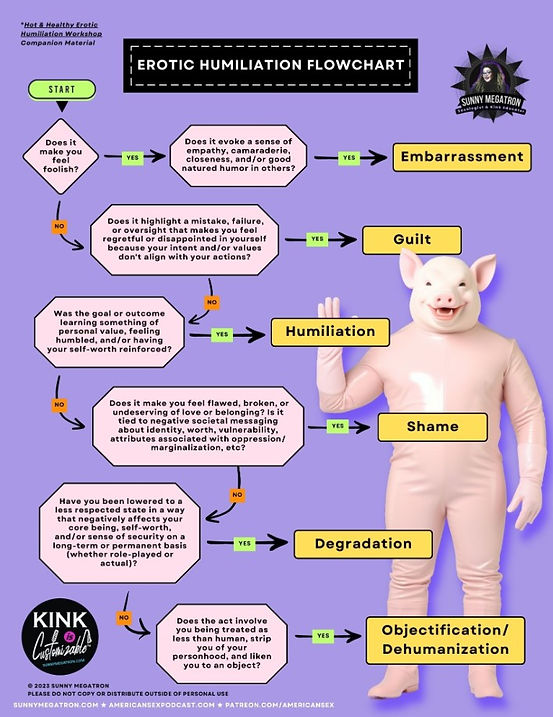
Humiliation and degradation fetishes involve consensual exploration of vulnerability, power, and emotional intensity through language, roles, or scenarios. For some people, this type of play can be cathartic, grounding, or affirming when it aligns with personal meaning and identity. For others, it may be distressing or harmful.
Because these fetishes can intersect with self-esteem, shame, or emotional history, negotiation is especially important. Participants should clearly define what language or behavior is acceptable, what topics are off-limits, and how aftercare will be handled. Ethical humiliation play distinguishes between consensual roleplay and real-world harm, and it always allows participants to stop or renegotiate without consequence.
A fetish is a focused interest, theme, or form of stimulation that carries personal meaning and significance for an individual. Fetishes can be physical, psychological, emotional, symbolic, or relational, and they are not inherently sexual in the narrow sense. For many people, fetishes are about context, sensation, power, trust, or identity, rather than specific acts. What defines a fetish is not intensity or taboo, but the role it plays in a person’s experience and how it is engaged with.
Fetishes exist on a wide spectrum. Some are central to a person’s sense of desire or fulfillment, while others are situational or exploratory. Ethical engagement with fetishes relies on consent, communication, self-awareness, and care—both for oneself and for others involved. Below is an overview of several commonly discussed fetish categories, approached from an educational and safety-focused perspective.
Abduction and CNC Play
Abduction fantasies and Consensual Non-Consent (CNC) involve pre-negotiated scenarios where resistance, loss of control, or power imbalance is intentionally roleplayed. Despite the name, CNC is built on explicit, informed, and enthusiastic consent agreed upon in advance. Participants clearly define boundaries, limits, signals, and exit options before any scenario begins.
These fetishes often center on trust, vulnerability, and psychological intensity rather than physical action alone. Because CNC can mirror real-world trauma or fear, it requires extensive negotiation, emotional awareness, and aftercare. Ethical CNC is slow to build, carefully contained, and immediately stopped if consent is withdrawn. It is considered an advanced form of play and is not appropriate without strong communication skills and mutual trust.
Edge Play
Edge play refers to kink practices that push personal, emotional, or psychological limits. The “edge” may be physical, emotional, mental, or symbolic, depending on the individuals involved. What makes something edge play is not a specific activity, but the heightened level of risk or intensity and the need for advanced awareness and responsibility.
Engaging in edge play requires honest assessment of skills, experience, physical and emotional capacity, and risk tolerance. Negotiation is detailed, safety planning is explicit, and accountability is essential. Ethical edge play prioritizes informed choice and recognizes that opting out or slowing down is always valid. This category emphasizes that risk is never taken lightly and that consent includes understanding potential consequences.
Leather
Leather is both a fetish and a culture. For many, leather represents identity, tradition, craftsmanship, and community rather than a specific activity. Leather culture often emphasizes values such as honor, integrity, mentorship, service, and chosen family. Wearing leather or participating in leather traditions can carry symbolic meaning tied to belonging and self-expression.
Leather dynamics may or may not involve power exchange or sexual elements. Some people engage with leather as a lifestyle or identity, while others experience it as an aesthetic or sensory preference. Respect for leather culture includes understanding its history, community norms, and emphasis on consent and accountability.